
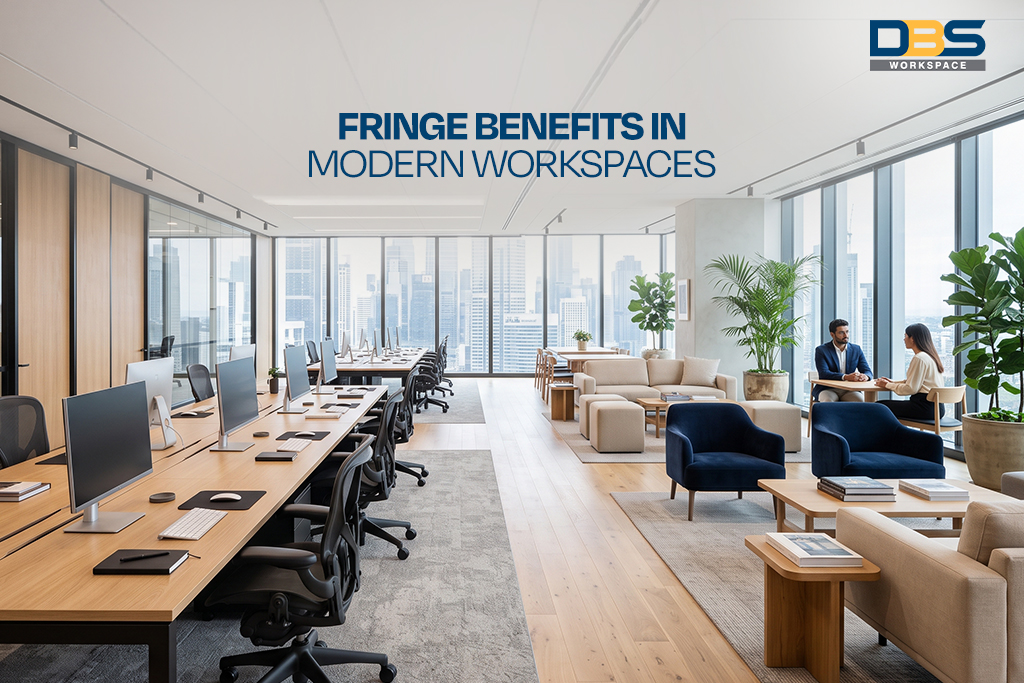
Salary is only one part of what employees receive from a job. The overall work experience is also shaped by additional employer support in the form of perks, facilities, and non-cash compensation. These are known as fringe benefits.
Fringe benefits play an important role in how employees view their workplace. In many cases, they influence satisfaction, stability and long-term retention just as much as salary does. A structured benefits system helps employees feel supported not only financially but also in terms of health, comfort, and day-to-day ease of work.
Today, organisations view compensation more comprehensively. Along with salary, they include insurance, paid leave, allowances and workplace support that improves how work actually gets done. In many modern setups, especially where teams operate in hybrid or distributed models, the working environment itself becomes an indirect part of employee experience.
In flexible business setups, this becomes quite visible. For example, teams that use Virtual Office Mumbai services or rely on meeting rooms for structured discussions tend to operate with more clarity in how work is organised. These elements may not fall under traditional HR benefits, but they still influence how supported employees feel in their day-to-day work.
To understand this better, it is useful to look at the fringe benefits meaning, importance, types and real-world examples.
What Are Fringe Benefits?
To understand what is fringe benefits, they can be defined as indirect forms of compensation provided by employers over and above salary.
The fringe benefits meaning includes non-cash perks such as insurance, paid leave, travel allowances, meal support and access to work-related infrastructure. These are not part of direct salary but still contribute to the overall value an employee receives.
In simple terms, fringe benefits are additional support that improves comfort, security, and overall job satisfaction at work.
Importance of Fringe Benefits
The importance of fringe benefits has increased as employee expectations have changed over time. People now evaluate jobs based on overall experience rather than just compensation.
Some key outcomes include:
- Better employee satisfaction
- Higher retention
- Improved engagement
- Lower workplace stress
- More stable performance
In modern work environments, the structure of work itself also plays a supporting role. Access to reliable meeting spaces or flexible office setups helps teams stay organised and reduces friction in collaboration. In many cases, this indirectly improves how employees experience their work, even if it is not formally labelled as a benefit.
Types of Fringe Benefits
There are several types of fringe benefits, depending on company structure and employee needs.
- Health and Insurance Benefits
Medical insurance, life insurance and accident coverage are among the most common fringe benefits examples offered across organisations. They provide financial security during unexpected situations.
- Leave and Time-Off Benefits
Paid holidays, sick leave and parental leave help employees maintain a healthy balance between work and personal life.
- Allowances and Financial Benefits
Travel reimbursements, meal allowances and communication support are commonly included in compensation structures.
- Work Support and Flexibility Benefits
Modern workplaces also include support linked to how and where work happens. Access to Meeting Rooms In Mumbai allows teams to conduct professional discussions without maintaining long-term office space. Similarly, Virtual Office enables businesses to maintain a professional presence while working remotely or across locations.
Fringe Benefits Examples in Real Work Environments
In practical settings, fringe benefits examples can be seen in everyday workplace situations:
- Employees covered under company health insurance
- Reimbursement of travel expenses for official work
- Flexible work arrangements based on team needs
- Use of Meeting Rooms in Mumbai for client presentations and interviews
- Virtual Office Mumbai setups for remote business operations and communication support
These examples show that fringe benefits are not always financial. Many are connected to convenience, structure and how work is organised.
Fringe Benefit Tax Meaning
The fringe benefit tax meaning refers to a tax applied to certain non-monetary benefits provided by employers.
Some perks may be classified as fringe benefit taxable, depending on their structure and how they are used. Companies generally assess these carefully to ensure compliance with applicable tax regulations.
Fringe Benefits for Employees in Modern Workplaces
The concept of fringe benefits for employees has evolved significantly. Earlier, benefits were mostly limited to insurance and fixed allowances. Today, they also include flexibility, access, and overall support for the work environment.
At DBS Workspace, we work closely with businesses operating in such evolving environments. Many teams use Virtual Office solutions to maintain a professional business presence without the overhead of a physical office. Similarly, Meeting Rooms are often used when teams need structured, professional environments for meetings, interviews or client interactions. While these are not traditional employee benefits, they contribute to smoother workflows and indirectly shape how employees experience their work.
Why Fringe Benefits Matter Today
Fringe benefits influence how employees evaluate workplaces today. Salary alone is no longer the only deciding factor when choosing or staying in a role.
For organisations, this leads to:
- Better hiring outcomes
- Lower attrition
- More engaged employees
- Stronger workplace stability
When employees feel supported beyond salary, their connection to the organisation becomes more consistent and long-lasting.
Final Thoughts
Fringe benefits are now a core part of modern employment structures. They go beyond salary and directly influence how employees experience their workplace.
From insurance and paid leave to flexible working arrangement and wellness programs, these benefits contribute to both comfort and efficiency in real work environments.
At DBS Workspace, the impact of structured work environments is evident in how teams function daily. When businesses have access to reliable infrastructure and flexibility, work becomes more organised, and employees can focus better on their core responsibilities.